AI Agents: The Rise of Autonomous AI Workers in 2026
Discover how AI agents are transforming businesses in 2026 autonomous systems that plan, analyze, and execute entire workflows with minimal human involvement.
What started as simple chatbots answering scripted questions has evolved into something far more powerful AI agents that can plan, analyze, decide, and act across entire business workflows, autonomously, around the clock.
Artificial Intelligence is no longer a passive tool waiting for human commands. In 2026, the defining shift in enterprise technology isn't another language model or productivity add-on it's the emergence of AI agents: autonomous systems capable of completing multi-step tasks from start to finish without constant human input.
What Exactly is an AI Agent?
Core Concept AI Agent · Autonomous System · Goal-Oriented
An AI agent observes, analyzes, and acts to achieve a goal without constant human direction.
Key Capabilities Observe · Analyze · Decide · Adapt · Optimize
AI agents reason through complexity, adjust mid-execution, and handle exceptions in real time far beyond rigid automation.
Chatbots vs. AI Agents
The distinction matters enormously for how organizations should think about deploying AI. A chatbot is reactive it waits for a question, returns an answer, and stops. An AI agent is proactive and persistent.


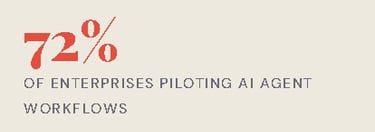
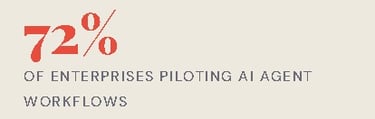
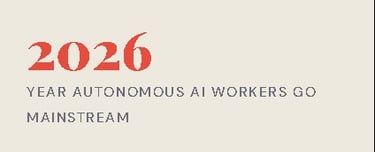

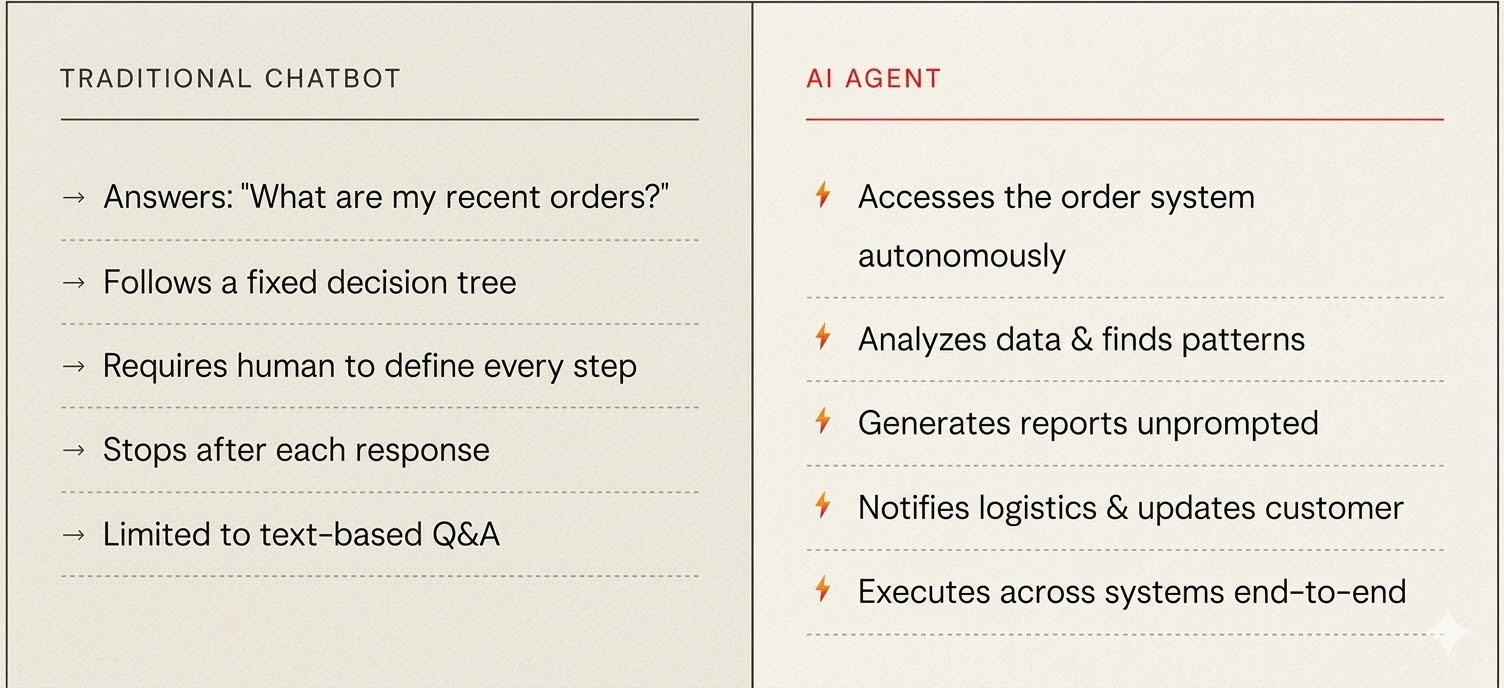
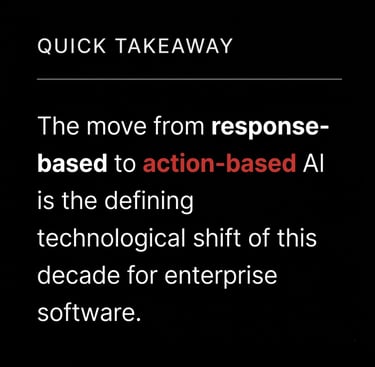
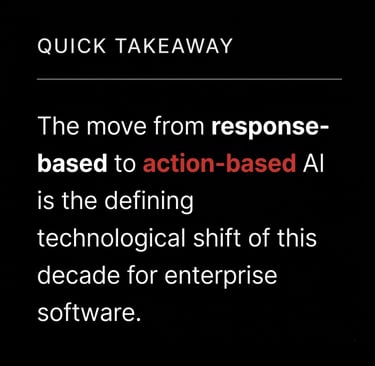
This shift from response-based to action-based AI is what makes agents genuinely transformative, not just incrementally useful
Core Capabilities
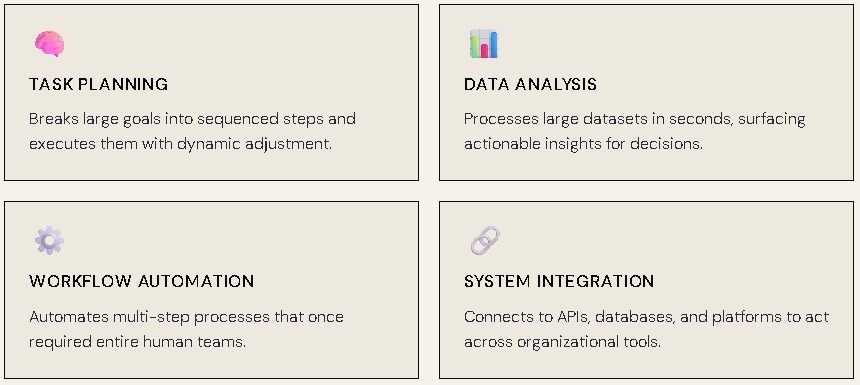
AI agents combine several advanced technologies that allow them to function autonomously across complex workflows.
Real-World Applications
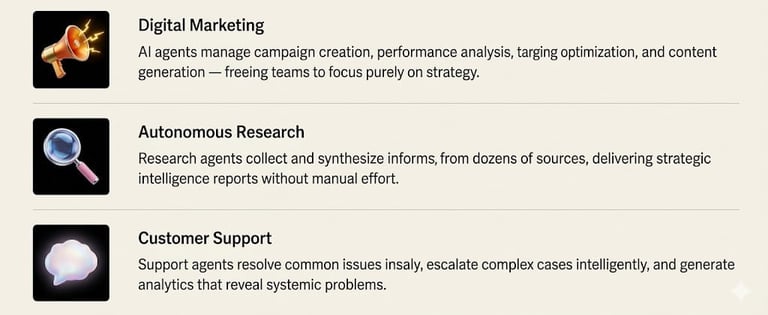
The technology is no longer theoretical. Across industries, teams are deploying AI agents to handle work that previously demanded significant human effort.
The Concept of an AI Workforce
Core Idea Multi-Agent Teams · Collaborative AI · Workforce of the Future
The real shift isn't one agent it's deploying entire teams of them, each with a specialized role.
Agent Roles Research · Content Creation · Campaign Optimization · Analytics
A single department could run multiple agents in parallel each owning a function, all working toward one goal.
What Comes Next
Conclusion
AI agents represent the most meaningful evolution in applied artificial intelligence since the large language model breakthrough. They don't just answer questions they plan, analyze, and execute complex tasks autonomously.
From managing marketing campaigns to supporting customers and analyzing business data, AI agents are quietly transforming how organizations operate. The transition won't be uniform or without friction, but the direction is unmistakable. The question for every business leader is no longer if to adopt AI agents it's how fast and how thoughtfully.
The development of AI agents is still in its early stages, but the trajectory is clear. In the coming years, agents may manage entire business processes from marketing and sales pipelines to operations and customer lifecycle management.
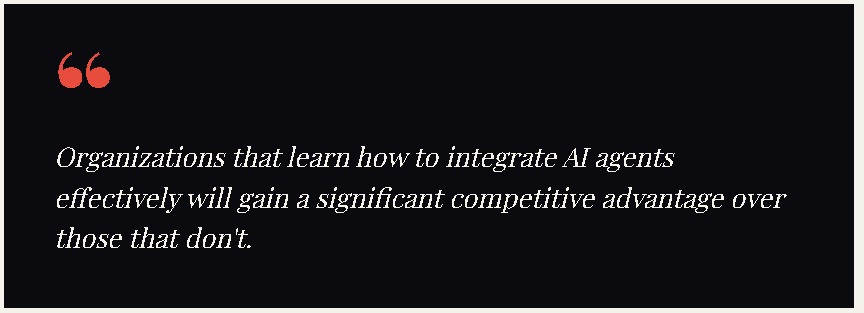
The organizations with the biggest advantages won't necessarily be those with the most funding or largest teams. They'll be the ones that figure out how to integrate AI agents strategically defining clear goals, maintaining appropriate human oversight, and iterating quickly.
We simplify your MARKETING & turn it into automated - GROWTH SYSTEMS.
Our Services
LinkedIn Positioning
YouTube Marketing
Lead Generation
X Marketing
Social Media Marketing
Performance Marketing
© 2026 Digicage. All rights reserved.
Just give it a SHOT!